We compared manufacturer specs, manuals and warranty terms. We have not hands-on tested these products yet. How we research
We may earn a commission when you buy through links on this page. As an Amazon Associate I earn from qualifying purchases. How we make money
A sand filter traps dirt as water passes through a tank of sand, and you clean it by backwashing. The decisions that matter are matching its flow to your pump, the tank and sand capacity for your pool's gallons, and how easy backwashing is. This page is for owners upgrading from a cartridge filter or replacing a worn one.
We compared 5 sand filters and picked 5.
Our picks at a glance
1
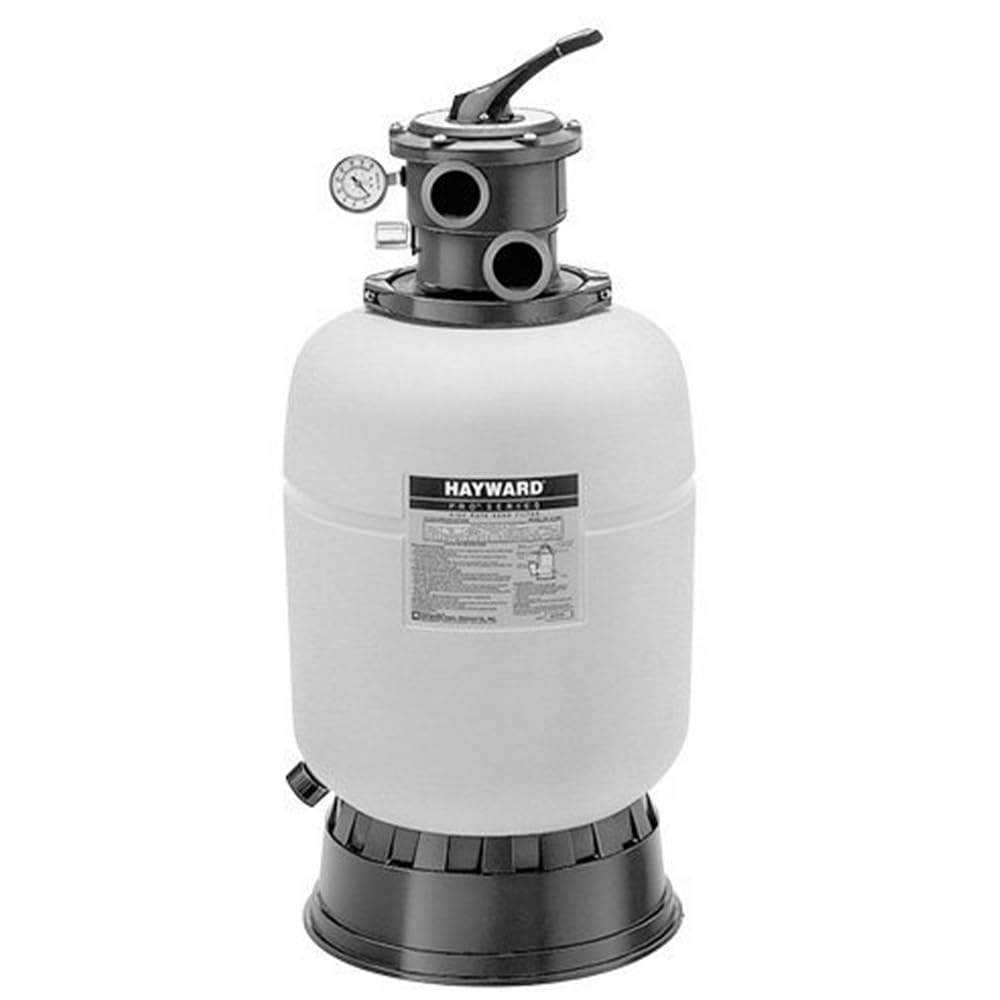
★ Start hereBest overallHayward ProSeries 16" (VariFlo)A corrosion-proof sand filter with Hayward's VariFlo multiport valve for above-ground pools.
$429.00Price as of Nov 25, 2026, 8:01 PM ET. Details
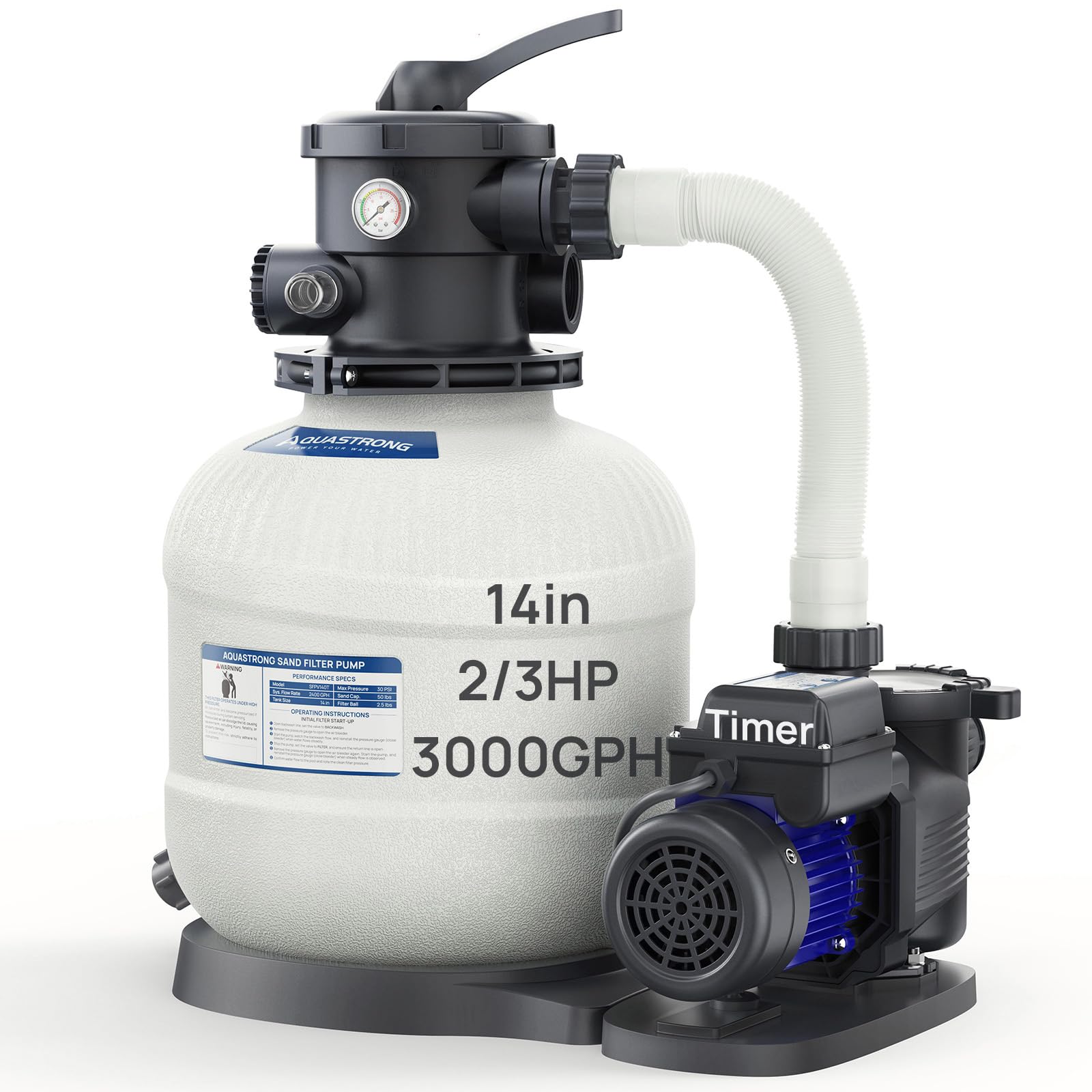
Best universal fitAQUASTRONG 14" Sand Filter Pump, 2/3 HP (SFPV140T)A 14-inch sand tank paired with a 2/3 HP pump for above-ground pools holding as much as 13,000 gallons, with adapters to hook up to Intex, Bestway and other brands.
$179.53Price as of Nov 26, 2026, 7:24 PM ET. Details
a bigger tank holds more sand and can filter more water at a time.
Maximum flow matched to the pump
a pump that pushes more water than the filter is rated for can hurt performance.
Multiport valve
the valve selects filter, backwash and rinse, so a good one makes maintenance easier.
Media options
the sand type and grade in the manual decide how the filter performs.
Hose fitting compatibility
fittings that do not match your hoses mean adapters.
Ease of backwashing
a filter that is hard to backwash will not get backwashed.
We compared 5 sand filters that fit this page and picked 5.
Sources: manufacturer product pages, manuals and warranty terms, plus the PoolSpaNews pump guide.
Specs as listed: every value in our table comes from the manufacturer or seller listing. Tank diameter, sand capacity, maximum flow and pool size range are as the maker lists them. A dash means the listing does not give that spec.
We have not hands-on tested these products. Full method
A 14-inch sand tank paired with a 2/3 HP pump for above-ground pools holding as much as 13,000 gallons, with adapters to hook up to Intex, Bestway and other brands.
Pros
Tank takes up to 70 lb of sand; 6-way valve with backwash and rinse
Timer with nine settings from 2 to 24 hours
Ships with 1.25 and 1.5-inch hose adapters and clamps
Cons
Tops out at 13,000 gallons; bigger pools need a larger tank
System flow is listed at 2,400 GPH, below the pump's 3,000 GPH figure
$179.53Price as of Nov 26, 2026, 7:24 PM ET. Details
A filter is only as good as its match to the pump. If you are comparing filter types, start with sand vs cartridge filter, then use our pump sizing guide to check flow. Work through the table in order. Match the pool size range to your gallons, check that the maximum flow is at or above your pump's flow, then look at the valve positions, the media the maker lists and the hose fittings. Finally, read how backwashing works on each model. The manual also tells you how much sand to add and how to start the filter for the first time.
Tank and sand capacity
Compare the tank diameter and sand capacity with your pool's gallons, using the pool size range in the table. Check the sand amount the maker lists, so you know how much to buy and move before you set the filter up.
Maximum flow matched to the pump
Pump flow must not exceed the filter's maximum rated flow (PoolSpaNews). Compare the filter's maximum flow with your pump's flow in our pump guide.
Multiport valve
Look at the valve positions listed. A multiport valve lets you choose between settings such as filter and backwash from one control. Check that the manual explains each position.
Media options
Use the media type and grade that the filter's manual lists. If the listing names alternative media, check what the maker says about them.
Hose fitting compatibility
Check the hose fitting size against your pump and pool, using the Fitting size column. If you must buy adapters, count them in before you decide, and read the manual for how the filter connects.
Ease of backwashing
Sand filters are cleaned by backwashing, while cartridges are removed and rinsed; see sand vs cartridge filter. Check the manual for where the waste hose connects and for how to read the pressure gauge.
Tips for using your sand filter
Follow the manual for the sand grade and the amount.
Backwash when the pressure gauge rises above the clean reading by the amount your manual gives.
Remember the filter only removes particles. Water still needs testing and balancing.
Follow the manual's start-up steps for new sand and for the first backwash, and keep the manual where you can find it in spring.
Compare the fitting size in the spec table with your hoses, so you know whether you need adapters.
FAQ
Sand or cartridge?
The two are cleaned differently: a sand filter is backwashed, while a cartridge is taken out and rinsed. See sand vs cartridge filter.
What media do I use?
Use the media type and grade named in your filter's manual.
When do I backwash?
Backwash when the pressure gauge reads higher than it did when the filter was clean, by the amount your manual gives.
Must the filter match the pump?
Yes. The pump's flow must not be more than the filter's maximum rated flow (PoolSpaNews).
What does the multiport valve do?
It selects what the filter is doing, such as filtering or backwashing. Check the Valve positions column and the manual for what each position means.
Is a pump included?
Some models come with a pump and others do not. The Pump included column in the table says which, and our pump guide covers matching the two.
How big a filter do I need?
Compare the tank diameter, sand capacity and pool size range with your pool's gallons. For a round pool, gallons come from radius times radius times 3.14 times average depth, multiplied by 7.48 (PoolSpaNews). Then check the maximum flow against your pump.
Does a sand filter replace testing?
No. A filter removes particles and does not sanitize the water, so you still test. The CDC calls for free chlorine of at least 1 ppm and a pH of 7.0 to 7.8 in a pool (CDC).