1. Best overall: Taylor K-2006C

Why we picked it
Taylor's complete kit with the FAS-DPD chlorine test, which counts drops instead of matching colors.
Pros
- FAS-DPD chlorine test
- Complete set of tests
Cons
- Takes time to learn

We may earn a commission when you buy through links on this page. As an Amazon Associate I earn from qualifying purchases. How we make money
Testing tells you whether the water is safe, and the kit you choose decides how accurate that answer is. The main choices are the method, which tests are covered, and whether the chlorine range handles a shock treatment. This page is for pool and hot tub owners who test often.
We compared 6 pool test kits and picked 6.


$27.00 Price as of Nov 24, 2026, 8:29 PM ET. Details
$12.99 Price as of Nov 24, 2026, 8:29 PM ET. Details

$19.23 Price as of Nov 25, 2026, 7:00 PM ET. Details

$9.99 Price as of Nov 25, 2026, 7:29 PM ET. Details
| Product | Method | Parameters tested | Chlorine range (ppm) | Reads combined chlorine | Tests per kit or refills | Salt test | Digital reader | Expiry date printed | Link |
|---|---|---|---|---|---|---|---|---|---|
|
Best overall
Taylor K-2006C
|
– | – | – | – | – | – | – | – | View on Amazon (opens Amazon in a new tab) |
|
Best value test kit
Taylor K-2005
|
– | – | – | – | – | – | – | – | View on Amazon (opens Amazon in a new tab) |
|
Best test strips
AquaChek 7-Way Strips
|
– | – | – | – | – | – | – | – | View on Amazon (opens Amazon in a new tab) |
|
Best for salt pools
AquaChek Salt Titrators
|
– | – | – | – | – | – | – | – | View on Amazon (opens Amazon in a new tab) |
|
Best 5-way liquid kit
Poolmaster 5-Way Liquid Test Kit (22260)
|
– | – | – | – | – | – | – | – | View on Amazon (opens Amazon in a new tab) |
|
Best basic kit
WWD POOL 2-Way Chlorine and pH Test Kit (11029)
|
– | – | – | – | – | – | – | – | View on Amazon (opens Amazon in a new tab) |
Specs as listed by the manufacturer or seller. Paid links.
Test method
the method decides how accurate the reading is.
What it tests
free chlorine and pH are the core readings, and extras matter for specific pools.
Chlorine range after shocking
high chlorine can read falsely low on some tests.
Accuracy
accuracy decides whether a reading is worth acting on.
Ease of reading
you need to read the result clearly to act on it.
Reagent shelf life and refills
old reagents give wrong readings and refills decide the running cost.
Taylor's complete kit with the FAS-DPD chlorine test, which counts drops instead of matching colors.
A 9-in-1 DPD liquid test kit that covers the essentials for less than the K-2006C.
Seven readings in seconds, handy between liquid-kit tests.
$27.00 Price as of Nov 24, 2026, 8:29 PM ET. Details
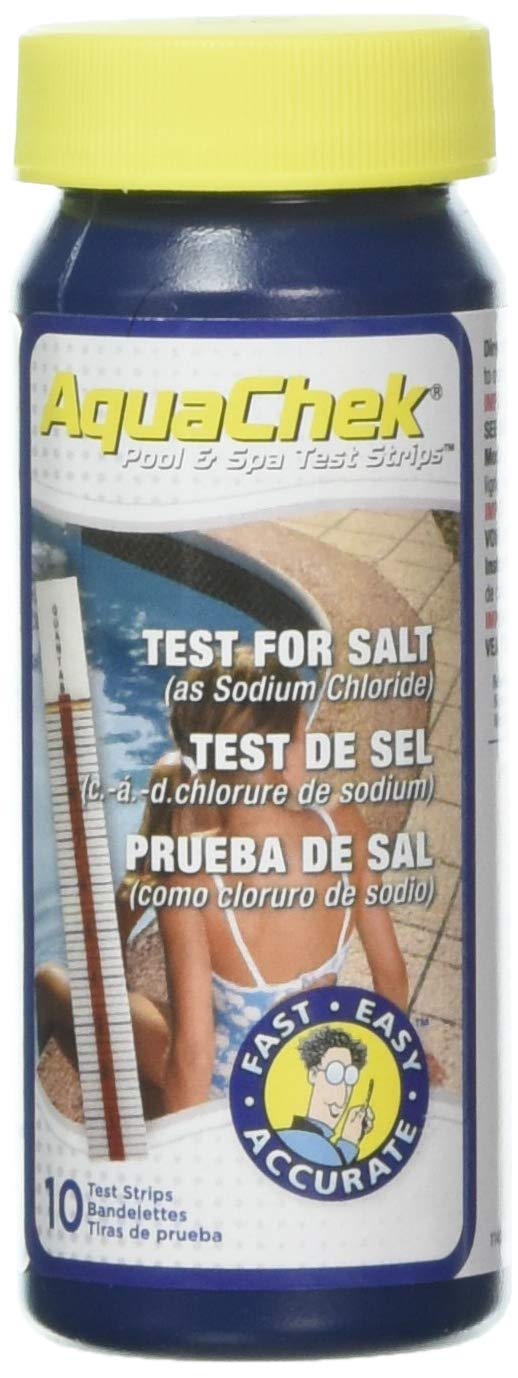
Simple titrator strips that read salt level for saltwater pools.
$12.99 Price as of Nov 24, 2026, 8:29 PM ET. Details
A liquid-drop kit that reads chlorine, bromine, pH, total alkalinity and acid demand, so one kit covers both chlorine pools and bromine spas.
$19.23 Price as of Nov 25, 2026, 7:00 PM ET. Details
A pocket-size liquid kit that checks only chlorine (or bromine) and pH, for owners who want a quick daily check with four drops per tube.
$9.99 Price as of Nov 25, 2026, 7:29 PM ET. Details
Choosing a kit comes down to method and range. Read pool chemistry for beginners to see which readings matter, and use how to shock a pool to know when you need the high range. Match the kit to your water. A pool needs free chlorine and pH readings, and a hot tub needs the same readings against a higher chlorine minimum. If you use cyanuric acid or a salt system, add those tests. Check the range for high chlorine if you shock the pool, and check the expiry date of the reagents. Our guide to pool chemistry basics lists the targets.
The CDC says a DPD kit is the most accurate option and that test strips are less accurate (CDC). Digital testers read the sample for you. Check the Method row, and see pool chemistry basics for how each method fits a routine.
Check that the kit covers free chlorine, total chlorine, pH and alkalinity at least. Add cyanuric acid, calcium hardness and salt if they apply to your pool. Combined chlorine is total chlorine minus free chlorine, so you need both readings to work it out.
Above 10 ppm the test can bleach out and show a falsely low or zero reading (CDC). If you shock the pool, check the maker's instructions for high chlorine and see how to shock a pool.
Method sets accuracy, so compare the Method row first. Check whether the kit lists a chlorine range and whether it reads combined chlorine. Follow the instructions for sample size and timing, since a reading taken the wrong way is no use.
Compare how each kit shows the result: a color chart, counted drops or a digital readout. If you struggle to tell shades apart, check the Digital reader column.
Check whether the kit prints an expiry date and whether refills are sold. Old reagents can give unreliable readings, so check the date on each new bottle. Refills decide how many tests you get from the kit.
The CDC puts a DPD kit first for accuracy and says strips are less accurate (CDC).
At least twice a day for chlorine and pH, and more often when many people use the pool or tub, according to the CDC (CDC).
Because very high chlorine can bleach the test. The CDC says that above 10 ppm the result may read falsely low or zero (CDC).
The CDC's targets: at least 1 ppm free chlorine in a pool, or 2 ppm if you use cyanuric acid; at least 3 ppm in a hot tub; and a pH between 7.0 and 7.8 in both (CDC).
Check the Parameters tested column and the manual. A hot tub needs free chlorine of at least 3 ppm and a pH of 7.0 to 7.8 (CDC), so make sure the kit's range covers those readings.
It is total chlorine minus free chlorine, so you need a kit that reads both. Our guide to shocking a pool explains how it is used.
If you use cyanuric acid, the CDC says chlorine should be at least 2 ppm, and it recommends not using cyanuric acid in hot tubs (CDC). Check the Parameters tested column for a cyanuric acid test.

Buying guide
Pool rating, output, cell life and power type, side by side.

Buying guide
Pool size rating, coverage, power and filtration, side by side.

Guide
The CDC chlorine and pH targets for pools and hot tubs, plus a weekly routine.

Guide
Combined chlorine, the 10x rule, steps and chemical safety, from public-health sources.

Buying guide
Seats, heater, jets, cover lock and winter limits, side by side.

Comparison
How chlorine gets in, costs, weekly work and what stays the same.
A one-page printable checklist with the CDC water targets and the safety checks to run every week. Free, and sized to stick on the pool shed door.